

Aleksandra Dubov
Aleksandra Dubov
Aleksandra Dubov
Student Cantor ·
Ritualist ·
Musical Artist·
Photographer·
HUC-JIR, ordination May 2027
I’m a cantor-in-training who believes prayer lives in the body, in the voice, and in a room full of people singing together. I’m happiest connecting with a community in song, grief, and celebration, and I also make music, photographs, and spaces for people to find their own voice.
Welcome.
If you’re a congregation getting to know me,
[start here →]


Songs
Inner Voice Lessons
Inner Voice Lessons
New Page
New Page

· There is an inevitability in all paths leading me here.
כׇּל־הַנְּחָלִים֙ הֹלְכִ֣ים אֶל־הַיָּ֔ם וְהַיָּ֖ם אֵינֶ֣נּוּ מָלֵ֑א אֶל־מְק֗וֹם שֶׁ֤הַנְּחָלִים֙ הֹֽלְכִ֔ים שָׁ֛ם הֵ֥ם שָׁבִ֖ים לָלָֽכֶת׃
All the streams flow to the sea...
and to the place the streams flow,
there they return to flow again.
(Kohelet 1:7)
I tried everything else I could. I followed every whimsy. I was a singing tour guide on a vintage fire engine truck in San Francisco, the lead singer in a heavy metal band with about ten fans, and a b’nei mitzvah photographer turned portrait lovetographer. I went to Burning Man for half a decade, the same number of years it takes to go through cantorial school. I taught Kundalini yoga, chanting mantras in Gurmukhi every morning at 5 a.m., and I created and cultivated a vocal activation curriculum, because what I loved most in all of it was helping people find their own voices.
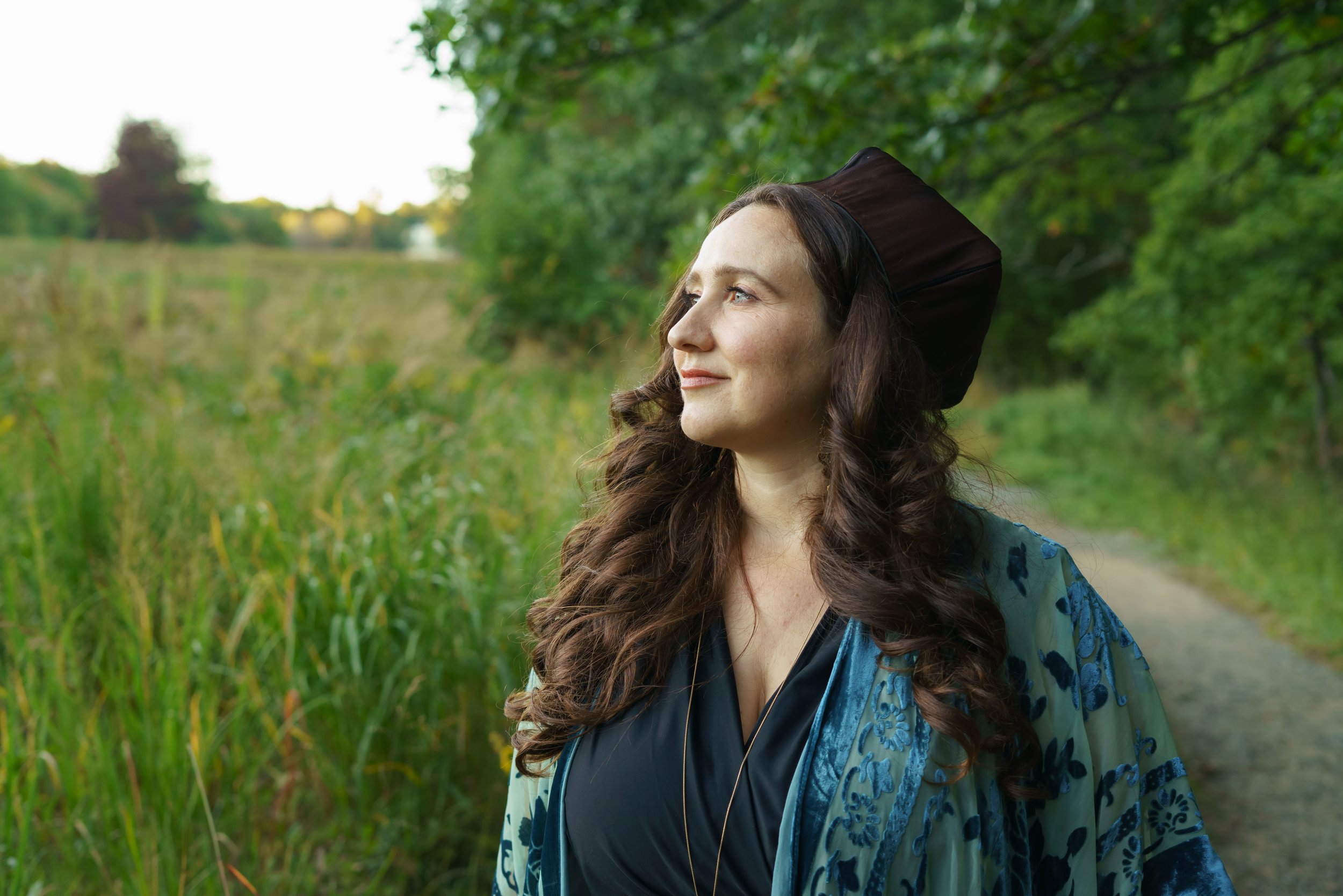
I always thought being a cantor was something you do when you grow up, and I was in no mood to grow up. I wanted to try everything, anything I could, to test my fate. Before my father, Cantor Stephen Dubov, died, he told me not to do what he did. He waited to start cantorial school later in life, and he told me to go right after college. I took the long way instead. But streams don’t take the straight route. They wind, and they still arrive.
Over the years, I have fallen deeper in love with every aspect of the cantorate. I have loved showing up every Shabbat to deepen with a congregation, and I am touched to help b’nei mitzvah students connect Judaism to their own paths. My senior thesis, on the cantor as healer, comes from wanting to be present with people in grief as well as in joy. I am honored to be someone who gets to hold people through their big and small life transitions. Through this work, I have become more of my authentic self. I am devoted to growth and connection, and I believe that when everyone is empowered to be their authentic selves, we will truly find peace on earth. This is my why, and I have accepted and embraced my destiny.
In May 2027, I will be ordained, and I imagine it will feel less like a finish line than a river mouth, where everything I’ve gathered along the way meets something larger than itself. I am ready to stop wandering and start belonging: to learn a congregation’s names, its songs, its losses, and its jokes, and to be learned in return. The verse promises the sea is never full. I hope to spend my life in that kind of arriving.